PEOPLE • HERITAGE • PROGRESS
The Story of
Vishwakarma
A story of creation, craftsmanship and service — and the enduring heritage of people who believe that skilled work can shape a better world.
THE ORIGIN
From the idea of creation to the art of making.
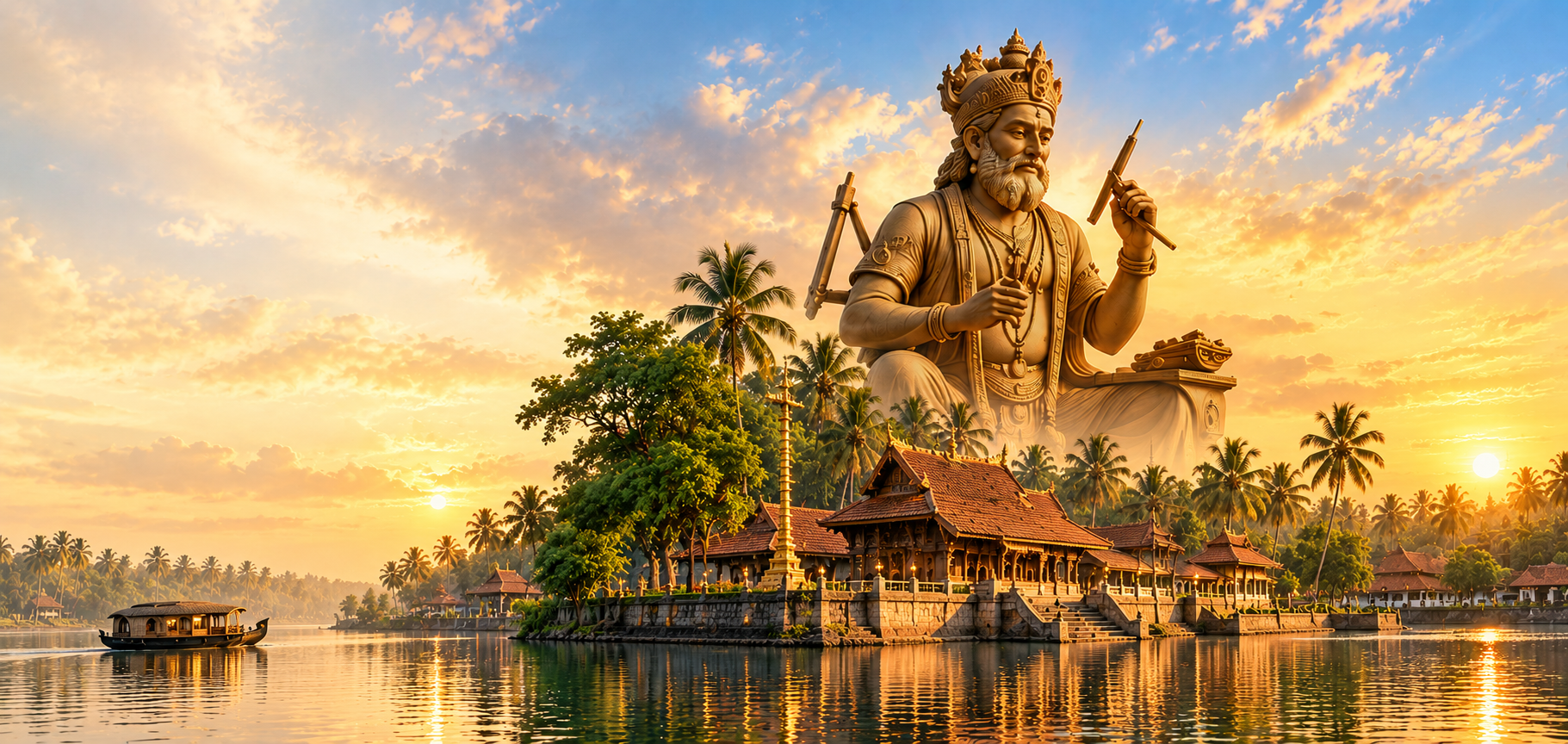
The name Viśvakarman is associated with the idea of the one who creates, makes and brings things into form. In the Vedic literature, Viśvakarman appears as a powerful creative principle and divine figure.
In later Hindu traditions, his identity becomes especially associated with the divine architect and craftsman of the gods — the master of design, construction, sculpture and skilled arts.
This transition from a cosmic creator to the divine master-craftsman gives Vishwakarma a unique place in Indian cultural memory: he represents not only creation, but the skill required to turn an idea into reality.
THE DIVINE ARCHITECT
What did Vishwakarma create?
Across the epics and Purāṇic traditions, Vishwakarma is remembered through stories of extraordinary construction, craftsmanship and ingenuity.
Cities & Palaces
Tradition remembers Viśvakarma as the divine architect responsible for magnificent cities, palaces and sacred spaces.
Divine Vehicles
He is described in epic and Purāṇic traditions as the maker of celestial vehicles and chariots belonging to the gods.
Arts & Crafts
Viśvakarma became a symbol of mastery over architecture, sculpture, metalwork, design and the many skilled arts.
Design & Measurement
His legacy became closely associated with vāstu, śilpa and the disciplined knowledge behind building and craftsmanship.

FROM DEITY TO COMMUNITY
How the community grew from this heritage.
The Vishwakarma community's connection with the divine architect is rooted in a shared tradition of craftsmanship. Different artisan communities across India have historically maintained occupational skills through families, apprenticeships and guru–shishya traditions.
Over generations, these traditions developed into strong community identities centred around skill, work, knowledge and mutual support. The name Vishwakarma came to represent an ideal: the skilled person who creates something useful, beautiful and lasting.
That heritage continues today — even as occupations have expanded from traditional crafts into modern engineering, construction, manufacturing, entrepreneurship, design and technology.
01
Skill
The dignity of skilled work and mastery of one’s craft.
02
Knowledge
Learning, teaching and passing valuable knowledge to the next generation.
03
Service
Using knowledge and skill to create things that benefit society.
04
Togetherness
Building stronger communities through shared identity and mutual support.
A LIVING HERITAGE
Many skills. One shared identity.
Community traditions describe Vishwakarma's descendants and followers through different streams of skilled craftsmanship. Rather than being limited to one occupation, the heritage celebrates the wider dignity of making and building.
01
Metalwork
Working with metal, tools and precision.
02
Woodcraft
Creating useful and beautiful structures.
03
Sculpture
Giving form to stone, metal and ideas.
04
Architecture
Planning spaces, structures and communities.
05
Fine Craft
Celebrating detail, design and skilled making.
VISHWAKARMA PUJA
When skill becomes a celebration.
Vishwakarma Puja is a celebration of work, craftsmanship and the tools through which people create their livelihoods. It is particularly visible in workshops, factories and workplaces, where tools and machinery are cleaned, decorated and worshipped.
For the community, the occasion carries a deeper meaning: gratitude for one's craft, respect for knowledge, prayers for safety and prosperity, and hope that the next generation will continue to learn and create.
Workplaces & Workshops
Factories, workshops, offices and places of work are cleaned and decorated for the occasion.
Tools Are Honoured
Tools, machinery and instruments of work are placed before the deity and worshipped with gratitude.
Community Togetherness
Families, workers, artisans and community members come together for prayer, food and cultural activities.
A New Beginning
The celebration expresses gratitude for work while seeking prosperity, safety, skill and progress.
THE LEGACY CONTINUES
The tools may change.
The spirit of creation remains.
Today, the Vishwakarma legacy can be seen far beyond traditional craftsmanship. Engineers, architects, technicians, entrepreneurs, designers, artisans and professionals continue the same fundamental idea: knowledge becomes meaningful when it is used to create, build and serve.